

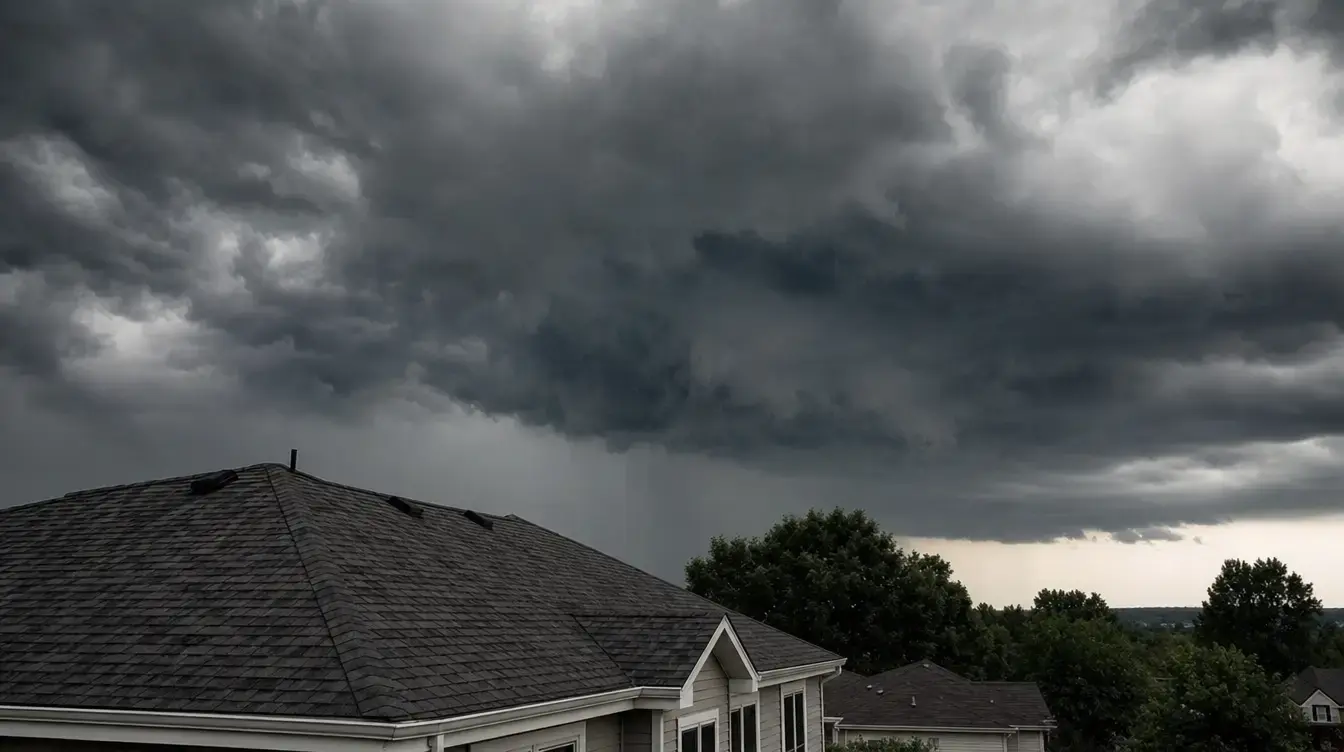
If a storm just hit your home in Mooresville or Statesville, do this first. Get to safety, photograph any visible damage from the ground, and call a local roofer for an emergency tarp if water is getting in. Then file your insurance claim and have a qualified inspector document the damage before you agree to anything. Acting fast on the tarp and slow on the paperwork is how you protect both your home and your claim.
Why Storms Hit Roofs Hard Around Lake Norman
The Lake Norman area gets its share of rough weather. Spring and summer bring fast-moving thunderstorms with high straight-line winds, heavy rain, and hail. The open water and wide skies around the lake mean wind can really get moving before it reaches your home. We see the same patterns across Mooresville, Statesville, Troutman, and out toward Salisbury: a storm rolls through in twenty minutes and leaves lifted shingles, dented vents, and clogged gutters behind. The damage is not always obvious from the driveway, which is exactly why so much storm damage goes unnoticed until the first leak shows up months later.
What Storm Damage to a Roof Actually Looks Like
Storm damage comes in a few forms. Some you can spot from the ground, and some take a trained eye on the roof to find. Here is what we look for.
Wind Damage
- ▸Shingles that are lifted, creased, curled, or torn off completely.
- ▸Shingles or debris in the yard after the storm.
- ▸Exposed nail heads or bare spots where shingles used to sit.
- ▸Flashing peeled back around chimneys, vents, and valleys.
- ▸Damaged or detached gutters and fascia.
Hail Damage
- ▸Round dents or bruises on shingles where the granules are knocked loose.
- ▸Dings on soft metal like vents, flashing, and gutters, which are often the easiest signs to confirm hail.
- ▸Granules piling up in your gutters or at the bottom of downspouts.
- ▸Cracked or split shingles, especially on older roofs.
Water Damage Inside
- ▸Water stains on ceilings or walls, often brown rings that grow over time.
- ▸Active drips or wet spots in the attic.
- ▸Sagging spots in the ceiling.
- ▸A musty smell that points to moisture sitting in the attic or insulation.
What to Do First After a Storm
The order you do things in matters. Move through these steps and you will protect your family, your home, and your insurance claim all at once.
- Stay safe. Do not climb on a wet or damaged roof, and stay clear of any downed power lines. Leave the roof to a pro.
- Document everything from the ground. Take clear photos and video of any visible damage, debris in the yard, and water spots inside. Date them if you can.
- Stop the water. If water is getting into the home, call a roofer for emergency tarping right away. A tarp buys you time and prevents the damage from spreading.
- Call your insurance company. Report the storm and start a claim. Write down your claim number and the adjuster's name.
- Get a professional inspection. Have a qualified roofer inspect and document the full extent of the damage before the adjuster comes out, so nothing gets missed.
- Save your receipts. Keep records of any emergency work or temporary repairs you pay for. Most policies reimburse reasonable steps you take to prevent further damage.
Emergency Tarping Buys You Time
When a storm tears shingles off or opens up the roof, the clock starts the moment it rains again. Every hour that water gets in means more damage to your decking, insulation, drywall, and belongings. A properly installed emergency tarp seals the opening and keeps water out until a full repair can be scheduled and the insurance process plays out. This is not a permanent fix, but it is the single most important thing you can do to keep a bad situation from getting worse. We respond to emergency tarping calls across Mooresville and the surrounding area so you are not left with a tarp held down by bricks.
The damage you can see is usually only part of the story. The damage you cannot see is what costs you if it sits.
How the Insurance Claim Works
Storm damage is exactly what your homeowners policy is for, but the process trips a lot of people up. Here is how it typically goes and where a good roofer helps.
After you file, your insurance company sends an adjuster to inspect the roof and write up what they will cover. This is the part where having your own qualified inspector matters. As a HAAG Certified Inspector, we know how to find and document storm damage the way an adjuster needs to see it, and we can meet the adjuster on site so the two assessments line up. If real damage gets missed, you can end up paying out of pocket for repairs your policy should have covered. We work through the insurance restoration process with homeowners every week, so we can help you understand your scope, your deductible, and what a fair settlement looks like.
Watch Out for Storm Chasers
After any big storm, out-of-town crews show up knocking on doors, promising to handle everything and pressuring you to sign on the spot. Be careful. Many of them are gone by the time a problem shows up, and a warranty from a company you cannot find is worth nothing. Stick with a local, established contractor you can actually reach. CER Roofing is based right here in Mt Ulla, has been in business since 2020, carries an A+ BBB rating, and holds a 5.0-star rating across 85 Google reviews. We are not going anywhere after the job is done.
If a storm has hit your home in Mooresville, Statesville, Troutman, or anywhere in Iredell and Rowan County, do not wait for the next rain to find out how bad it is. We will inspect the roof, document the damage, get a tarp on if you need one, and walk you through your insurance options. No pressure, no scare tactics, just a straight assessment from a crew that lives and works here.
Storm damage will not wait, and neither should you. Call CER Roofing at (704) 902-6128 for emergency tarping and a free storm damage inspection.
Related CER services
CER Roofing Contractors, LLC
5.0-star rated (85 reviews), GAF & HAAG certified roofing across Iredell & Rowan County, NC since 2020.
(704) 902-6128